
By Jack Sutton
I’m sitting at my desk at 1 AM as I write this. My room is pitch black, illuminated only by the faint glow of my computer screen. At this hour, the music of choice is quite particular. I need something relaxing but uplifting, and thankfully a genre exists that can perfectly satisfy these nocturnal needs.
In traditional music history, genres were thought to have emerged from specific places. Jazz from New Orleans, Hip-Hop from Brooklyn, Techno from Detroit. Vapourware, however, seems to have an ambiguous place of origin. The subgenre of electronic music was popularized in 2010 with the release of multiple notable albums, including the inaugural Floral Shoppe from Macintosh Plus. Ramona Xavier, who created the album under the alias Macintosh Plus, had truly made a breakthrough. In Floral Shoppe, she presents us with an amalgamation of 80s and 90s music. The repurposed samples of chorus create an eerie, yet relaxing, dreamscape. On the beloved track “リサフランク420 – 現代のコンピュー”, we hear Xavier’s take on Diana Ross’s “It’s Your Move,” which is barely recognizable under layers of droning drums and excessive reverb. The track has become a vaporwave classic, even establishing techniques that continue to be repeated today.
Vapourware’s sample-heavy formula drives its main theme, which is a critique of modern society. Specifically, vaporwave draws from the superficial promises of capitalism. The 80s and 90s were times of economic hope, when corporations reigned supreme. The two decades were heavy on lifestyle advertising and consumerism. Vaporwave is essentially a critique of these concepts, a reflection on the dreams of the past. This is why most vaporwave, both audibly and visually, is obsessed with corporate aesthetics and advertising. In fact, it’s quite common to hear cuts of old advertisements in some tracks. Typical vaporwave album artwork especially reflects this theme, with images of fashion and technology. These thematic influences seem to be a bit nonsensical, given the genre’s birthplace deep within the internet. As such, you naturally begin to wonder whether the theories hold any true meaning. Oddly enough though, the themes of vaporwave continue to surface almost a decade after the release of Xavier’s inaugural Floral Shoppe.
The beauty of vaporwave is the curiosity it piques. Because the genre is so vast, one can spend hours discovering new music. In fact, I think there’s a bit of effort required. Sure you can listen to the classic genre-defining titles, but it’s especially exciting to find something rare. After 3 years of experience with the genre, I’ve cultivated a certain taste for underground artists. Here are a few of my all-time favourite works:
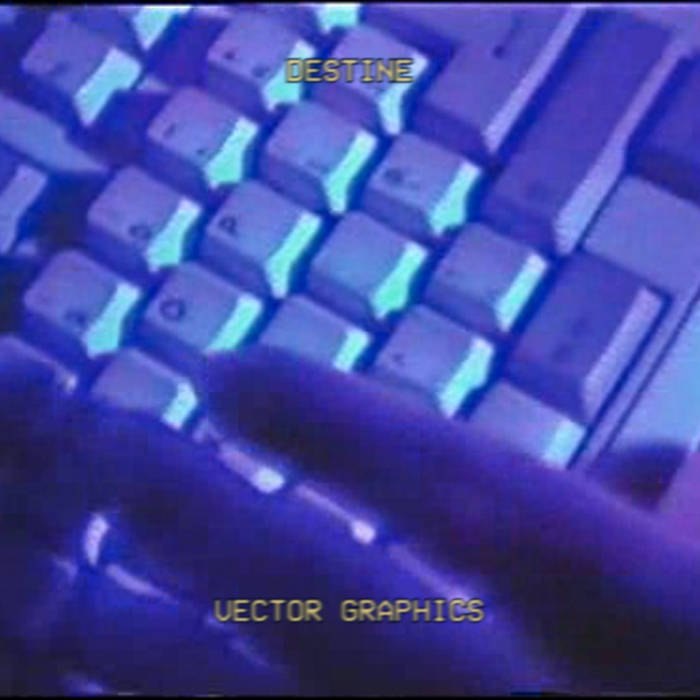
Vector Graphics is one of the more obscure vaporwave artists. Within their small community of followers, Destine is widely considered their best work. It’s a classic-style vaporwave release which employs techniques from the genre’s early innovators. It was released on July 8th of 2015. One of my favorite aspects of this release is the artwork. It pictures the bottom right of an old keyboard as someone’s hands glance over the keys. This pays respect to the genre’s theme of technology and consumerism. In addition to the now-archaic tech, the album and artist names are scrawled in a blurry, yellow VHS font as a purple haze envelops the image. I find it absolutely breathtaking–such an easy concept, yet aesthetically pleasing.
As for the music, it certainly bears resemblance to other vaporwave projects. Despite this, Vector Graphics manages to employ the tired techniques pioneered years ago with noticeable originality. For one, the samples they use for the tracks are very obscure and hard to find. Secondly, Vector Graphics structures the songs in an interesting way. The album’s 6 tracks are really 9, since two of them feature multiple songs under one name. This may seem lazy, but I believe it to be an artistic choice. To nail the theme of corporation and advertising, the tracks are prematurely interrupted by violent static before transitioning. It’s as if the songs were only previews of a product.
My favorite track from the album is “ALBA83.” It opens with a relaxing synth loop and a killer bassline. Then, at 1:40, a violent warping sound swallows the previous song to replace it with a new one. The second half of “ALBA83” is my favorite. In contrast to the first segment, it features a punchy kick drum over a dilapidated grand piano.This is “Destines’s” biggest strength, as it drives the tired theme of vaporwave in a brand new and creative way. The broken transmissions of tracks are funky and deep. The best part is no one knows who Vector Graphics is. They have absolutely no imprint on the internet other than their music, and this enigma makes it even better.
The same goes for 18 Carat Affair, a similar artist whose real identity is shrouded in mystery. Though he has no name attached to his alias, there are a few rare pictures of him. As of now, he has 18 musical projects released, dating from 2009 to 2019, though his 2009 release fails to fall under the vaporwave genre, since it had not been popularized yet.
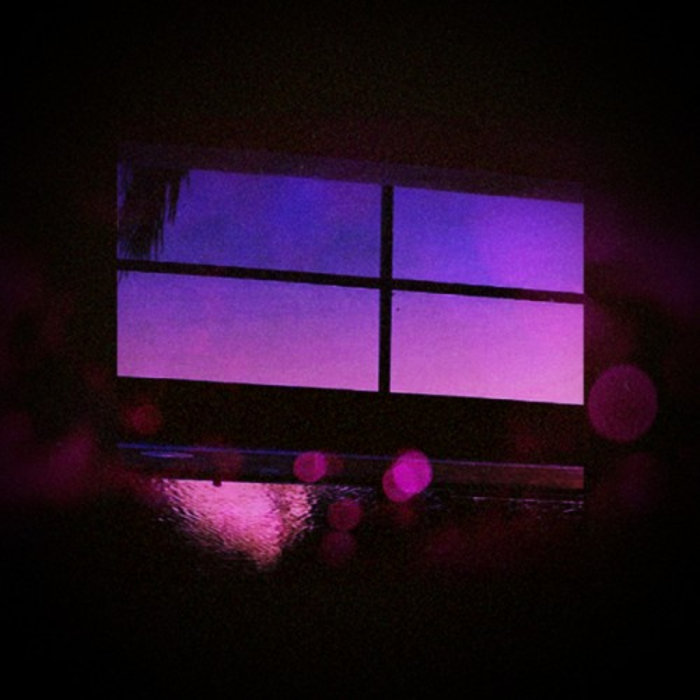
In 2011, he released Vintage Romance, a project with a definite energy to it. As the title suggests, Vintage Romance seems to be a collection of romantic tracks. The album creates an easy-listening experience, which is only broken by a few more experimental tracks. I picture the album being played on a night out with a significant other. Yeah, it’s cheesy, but that’s the beauty of vintage romance: couples driving around at night in 80s muscle cars. The opening track “Desire” is an unforgettable trip through 80s groove, making it the most popular track in 18 Carat Affair’s catalogue. Subsequent tracks on “Vintage Romance” feature vocals which are quiet in comparison to the attached instrumentals. At times, the lyrics are even indistinct, which would be unacceptable in a normal genre. But it works for vaporwave.
I highly suggest that you listen to Vector Graphics’ Destine and 18 Carat Affair’s Vintage Romance. They are perfect introductions to the world of vaporwave, which will certainly pique your interest. Furthermore, you’ll find yourself deep down the rabbit hole of internet music, where you’ll continue to discover even more sonic gems. It’s hard to pinpoint the exact origin of vaporwave and it’s related themes. In fact, it’s highly intimidating to navigate the various theories on the mysterious genre. In the spirit of reflecting on themes of past, has vaporwave become that which it critiques? After all, it’s still a piece of media, and its purpose is to be marketed and consumed. Perhaps vaporwave itself is synthetic, a mere repetition of the subject it draws inspiration from. I really just need to sleep now.
 The Howlander