By Sebastian Appleyard
As I sat in the plane, hearing the drone of the engine in front of me, I looked out the window. Ten thousand feet below me were the crashing waves of Hudson’s Bay. Directly beneath our plane, stretching away towards the horizon, was a distinct line of foam where the saltwater of the Atlantic met the fresh waters of the Churchill and Nelson Rivers flowing into Hudson’s Bay. As we flew low over the landscape, to one side of us, polar bears looked up at our plane, white spots against the red ground of the tundra. To the other, we could see the shimmering reflections of crowds of Beluga whales below the surface. Our plane started to descend, swooping low over the cabin that would be our home for the next five days. As we stepped out of the aircraft, little did I realize the transformative changes that lay ahead.
The following day, my family and I awoke from our slumbers to the beautiful sight outside of our window. The first rays of light crept over the horizon, the sun glinting off the clear waters of Hudson’s Bay. The light brought with it warmth after the cold night and the ground lichen started to lose its layer of frost. Outside it was silent. Being above the treeline, no birds would sing in the morning. There was a feeling of excitement in the air. Today was the day we had all been waiting for, the reason we had made the two-thousand-kilometre journey to Manitoba.
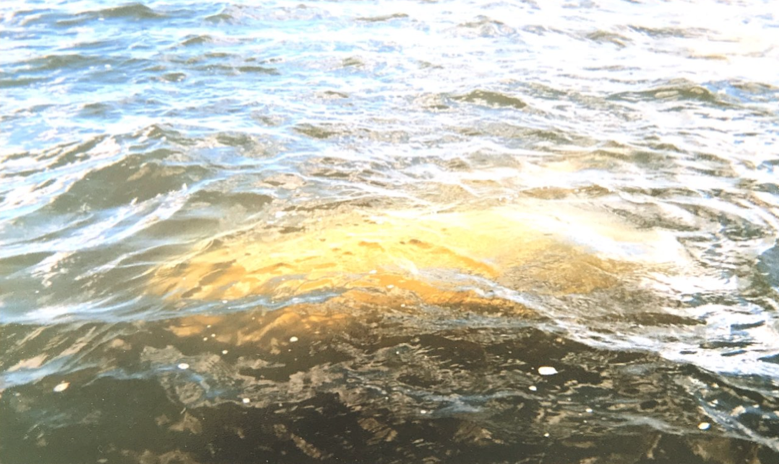
After breakfast, my family and I put on dry suits to protect us from what was to come. We headed down to the shore where we unloaded Zodiacs into the water. The guide started up the outboard motor, and we pushed off into the open water. We drove through the clear ocean for about twenty minutes, our boat planing over the surface. After a while, we spotted what we were looking for: a group of white spots just visible below the surface.
As we all rushed to the side of the boat to see their shimmering reflections below the surface, the guide asked, “Who would like to go first?”
I eagerly raised my hand. I stood on the back of the boat with the rope tied around my ankles and my snorkel mask in position. I shivered from the cold and the excitement before plunging into the icy bay. As I floated there, face down in the water, slowly drifting away from the boat, I heard the engine start up. The boat started to move along slowly, and the rope became taut. As I was pulled gently behind the boat, the curious mammals came towards me. Within a few minutes, I was surrounded by Beluga whales of all ages. They swam below and around me so close that I could have touched them. Before heading out, we had been instructed to hum, as it would draw them towards us. As I lay face down in the water being pulled along, I began to hum to the Belugas and more swam towards me. Many of the Belugas were full-grown adults, but there were also a number of young whales swimming beside their mothers. Beluga whales are about four meters long, weighing just over one and a half tonnes, but compared to most other whale species, they are quite small. As I was pulled along, I could see the curiosity in their eyes looking up at me. One of the most fascinating things was their “smile.” The whales looked as though they were grinning at me as I floated along. Their facial expressions were contagious, and I soon found myself grinning back at them. After about five minutes, it was time for someone else to try. I climbed back into the Zodiac to give my family their turn. As I sat shivering in the boat watching the white dots that were the Belugas swimming around and hearing my brother and sister’s squeals of delight, I thought about how lucky I was to be there.
The following day we went on a ten-kilometre hike to the tree line. As we made our way towards the forest, we walked with little noise except for the occasional cry of seagulls flying overhead and the squelch of the tundra grass mixed with swampy water below our feet. When we reached our destination, the scenery abruptly changed. In front of us was a pine forest, and to our back, stretching away for hundreds of kilometres was the empty expanse of the tundra. As we made our way into the pine forest, we could hear the sounds of birds chirping in the trees overhead and Siksiks, small Arctic rodents, running along the forest floor. The trees were a mixture of Spruce, Jack Pine, Tamarack and Balsam. One might expect that the treeline would be a slow reduction in the number of trees, from full forest to a treeless landscape, with the levels of vegetation slowly decreasing over a number of kilometres. In fact, in around ten meters, it dropped from full forest cover to no trees at all.
On the plane ride home, I looked out of the window as we passed over the tree line, and I could see it snaking its way across the tundra below, dividing the landscape in two. As I sat there looking out at the magnificent view, I reflected on our trip. Many Canadians choose to travel abroad for holidays, looking to escape the cold climate and find warmer spots to spend their vacations. Still, many Canadians have not seen much of the country where we live.
My short trip to the Arctic provided me with a glimpse into how large Canada is. After taking three flights to reach Churchill, Manitoba, where we were staying, it seemed very remote. The only way to reach Churchill is by air or by rail. With how remote and how far north it felt, we were still further south than London, England, with the most northerly inhabited spot in Canada being almost another three thousand kilometres further north.
It is one thing to hear about how global warming is affecting countries around the world, but it is a completely different feeling to see how it is affecting our own country. This trip taught me how important it is for Canadians to see our own country before climate change affects it irreversibly. It is important for Canadians to see our wonderful country to understand the need to protect the beautiful landscapes that sweep from sea to shining sea.
This trip was an extremely memorable experience for me. Being so close to Belugas provided a window into the lives of the creatures that scientists are still just starting to understand. I learnt so much about how large the Arctic is and how important it is that we take actions to limit the effects of climate change to protect our beautiful country for future generations.
 The Howlander